

| Getting your Trinity Audio player ready... |
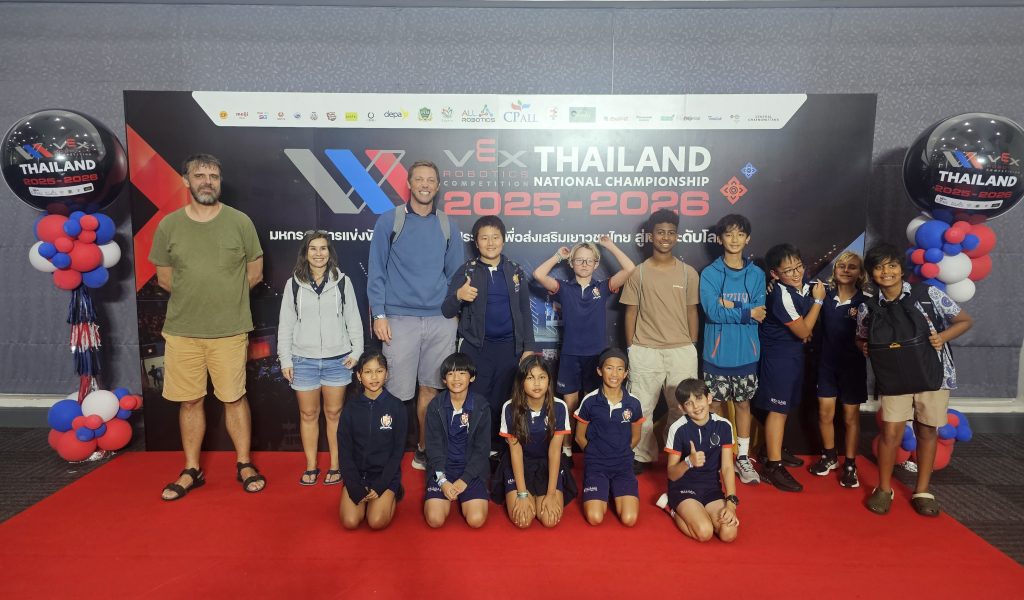
Our Year 6, 7, and 8 robotics teams recently travelled to Bangkok for the exhilarating Mix and Match VEX tournament, competing in a massive field of over 80 teams. This journey began back at the start of Term 1, with students dedicating countless hours in the Innovation Hub during their break and lunchtimes to design, build, and code their robots.
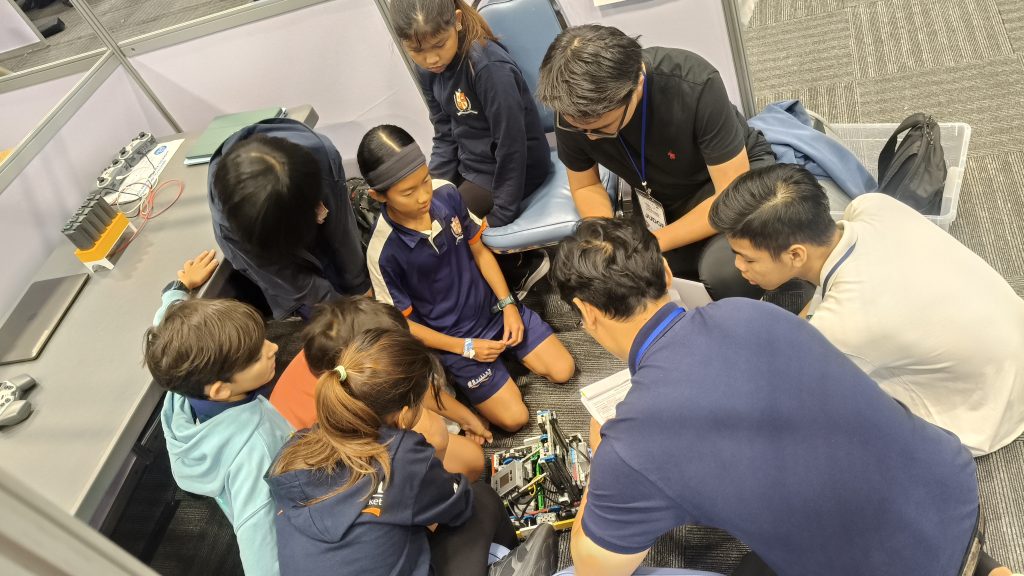
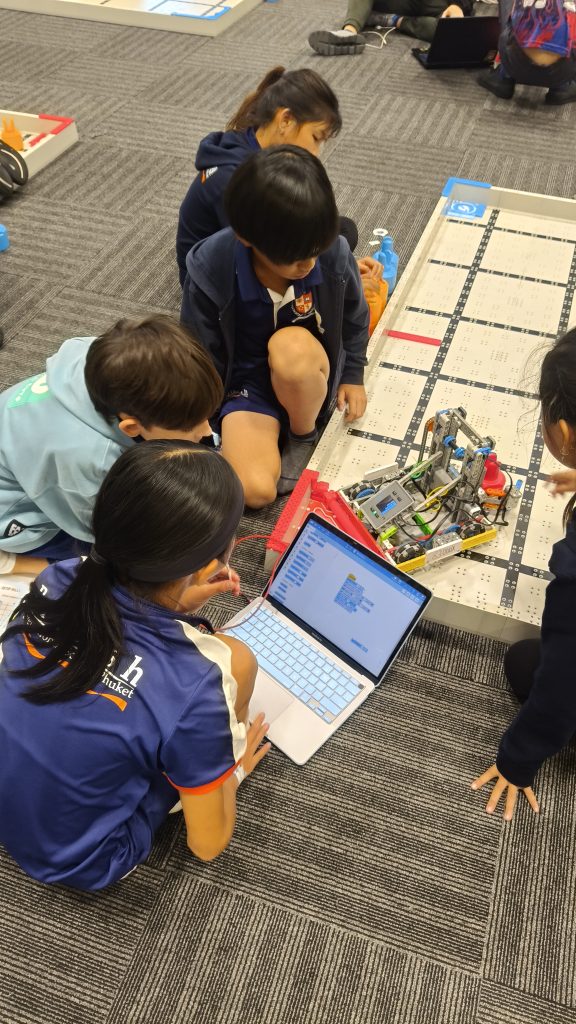
Their commitment extended well beyond school hours, as they worked from home to complete detailed engineering notebooks and conduct research into mechanical efficiencies. This hard work was evident on the competition floor, particularly as our Year 8 team navigated a series of intense rounds to qualify for the finals. While our Year 6 and 7 teams narrowly missed the final cut, their performance was a testament to months of preparation. The Year 6 team, in particular, showed immense grit; despite the pressure, they repeatedly returned to the practice field to refine their autonomous code, successfully securing points in the autonomous rounds through pure persistence.
Throughout the event, the students excelled at problem-solving, constantly refining and adapting their robots to overcome mechanical wear and meet the evolving challenges of the competition.
Success in the Mix and Match format relies heavily on social diplomacy, as our students had to form strategic alliances and discuss tactics with both independent robotics clubs and different schools. By collaborating with such a diverse range of peers and making new friends along the way, they proved that elite robotics is as much about communication as it is about engineering.
We are incredibly proud of how these young innovators represented BISP, showing that their months of disciplined research and lunchtime builds have truly paid off.
What is a Mix and Match Tournament?
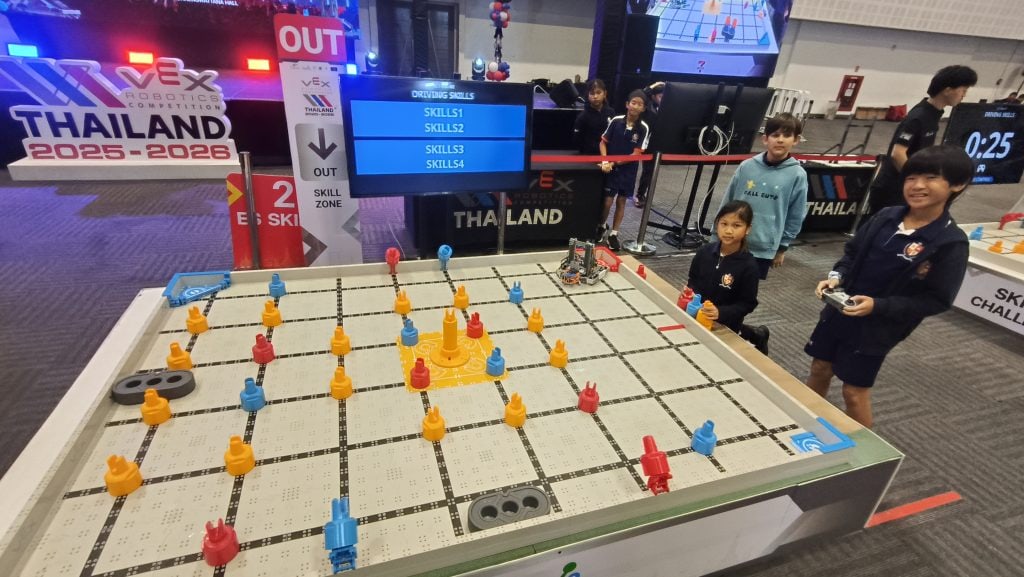
The VEX IQ Mix and Match format is a unique challenge designed to test a student’s ability to collaborate. Unlike traditional competitive formats, where you only work within your own team, this tournament requires students to form “Alliances” with teams from different schools or robotics clubs.
Together, they must coordinate their robot designs and driving styles to achieve the highest possible score in a 60-second match. While the primary matches are driver-controlled, teams also face the “Skills” challenge, which includes an autonomous period where the robot must run solely on pre-written code. It is a game that rewards technical reliability, quick thinking, and the ability to work with anyone to solve a problem.